

Screen Time did not work. Deleting Instagram lasted four days. Opal made you wait ten seconds and you waited ten seconds. If you are reading this, you already know the problem is not information; it is that at 11pm, with your thumb on the glass, nothing stands between you and the feed.
Christian app blockers put something there. Not a wall: a prayer. This guide covers the ones worth knowing about, what each one asks of you to unlock, and who each is for.
We build one of them, PrayerMax, so we have told you exactly where our bias is and tried to be fair to the rest.
What a Christian app blocker actually does
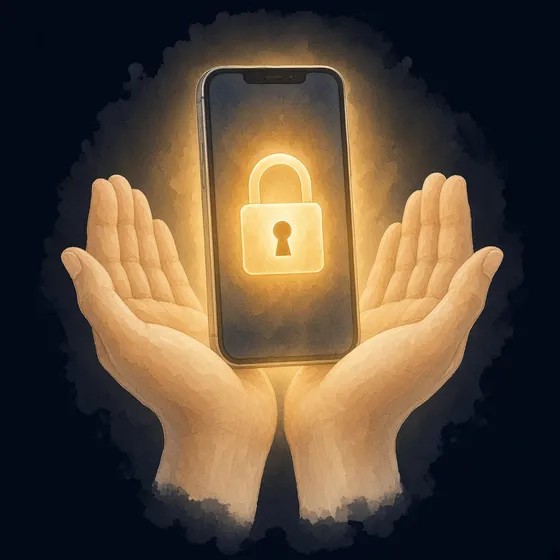
All of these apps work the same way under the hood. They use the operating system’s own screen-time framework (Apple’s Screen Time API on iPhone, the equivalent on Android) to lock apps you choose. When you tap a locked app, the blocker opens instead and asks you to do something before it lets you through.
The difference is the something:
- Pray a written prayer (PrayerMax, Prayer Lock)
- Read a Bible verse or passage (FaithLock, Bible Mode, Psalmo)
- Type out a verse (some Bible-to-unlock apps)
- Sit with a short devotion (Holy Focus and similar Catholic apps)
And the strictness: some let you through immediately after the prayer, some hold the lock for a set time regardless, some let you set daily limits on top.
Because they use the OS framework, none of them can see inside your apps or read your messages. They know when to lock and when to unlock; that is all.
The list
1. PrayerMax: lock apps, unlock by praying
Unlock: a written prayer, a short Bible story, or a prayer written for what you are carrying that day Price: free (blocking, personal prayers, starter library); Pro unlocks the full library and multiple locks per day Platforms: iPhone, Android
PrayerMax is built on one idea: a door, not a wall. You choose the apps that pull you away. Once a day they lock. When you reach for one, you get a quiet dark screen and three ways through: a short prayer from the library, a three-minute Bible story, or a prayer PrayerMax writes for you when you tell it what is on your mind (the exam, the diagnosis, the argument).
Then your apps open for a few minutes and rest again.
What we think we do best: the prayers are actually good, the unlock never shames you, and the personal-prayer feature means the thing standing between you and Instagram is specific to your day, not generic. No account, nothing tracked.
Where it is not for you: if you want a strict hard-blocker that keeps apps locked for hours regardless, PrayerMax is deliberately gentler than that.
2. Prayer Lock: block apps and pray
Unlock: pray (typically by reading or typing a prayer) Price: free trial, then subscription Platforms: iPhone
Prayer Lock is the closest in spirit to PrayerMax: lock apps, pray to open them. It has a clean interface and a decent set of prayers, and it gets the core loop right. The main differences are that it is iPhone-only at time of writing, the blocking sits behind a subscription after the trial, and the prayers are less varied. If you want a straightforward pray-to-unlock and do not mind paying for the lock itself, it is a solid choice.
3. FaithLock: read Scripture to unlock
Unlock: read a Bible verse or short passage Price: free trial, then subscription Platforms: iPhone, Android
FaithLock made the “read a verse to unlock” model popular. Each time you open a blocked app you get a verse, and you have to spend a moment with it before you are through. It is well designed and the verse selection is good. The limitation is philosophical as much as practical: reading a verse is quicker and easier to skim past than praying one, so for some people the friction wears thin after a few weeks. If you want Scripture exposure specifically, it is very good at that.
4. Bible Mode: read the Bible to earn screen time
Unlock: read Bible passages; time reading converts into app time Price: subscription Platforms: iPhone
Bible Mode ties reading time to screen time: read for a few minutes, earn a few minutes in your blocked apps. It is the most “gamified” of the group and it works well for people who respond to that kind of structure. It also gets you through more of the Bible than any of the others. The trade-off is that it can start to feel transactional; some people find that reading Scripture to earn TikTok does something odd to their relationship with both.
5. Psalmo: Bible verse app blocker
Unlock: engage with a verse (read, sometimes type it) Price: free trial, then subscription Platforms: iPhone, Android
Psalmo is a newer entry in the verse-to-unlock category with a pleasant design and cross-platform support. It sits close to FaithLock in what it does. Worth a look if you want a verse-based blocker on Android, where the options are thinner.
6. Holy Focus and other Catholic screen-time apps
Unlock: short devotion or prayer Price: varies Platforms: mostly iPhone
There are several smaller Catholic apps in this space that combine a blocker with a devotional: a short prayer to a saint, a line from the Catechism, a Marian prayer. They tend to be built by very small teams and update slowly, but if you specifically want Catholic devotional content as the unlock, they exist. Search “Catholic screen time” on the App Store; the names change.
7. The general-purpose blockers, with a prayer added
Opal, one sec, Freedom, ScreenZen, Apple Screen Time
Not Christian apps, but worth mentioning because many people use them with a prayer habit bolted on. one sec in particular makes you take a breath before opening an app, and some Christians use that pause to pray. Opal and Freedom are strong hard-blockers with scheduling.
The problem is that the friction is empty. You sit through the timer and nothing fills the space, so nothing forms except mild irritation. If you are going to be interrupted anyway, a prayer is a better interruption than a countdown.
How to choose
Three questions:
What do you want the unlock to be? If you want to pray, PrayerMax or Prayer Lock. If you want to read Scripture, FaithLock, Bible Mode or Psalmo. If you want a Catholic devotion, look at Holy Focus and its neighbours.
How strict do you want it? If you know you will delete anything that feels like a prison, choose a gentle one where you can always get through by praying (PrayerMax). If you want to be held, Bible Mode’s earned-time model or a hard blocker with a prayer habit on top.
What is free? PrayerMax’s blocking is free. Most of the others charge for the lock after a trial. That matters less than whether you will actually keep it installed, but it matters.
Our honest recommendation
Try the gentle one first. The blockers people keep for months are not the strictest; they are the ones that never make you feel like a failure. A wall gets climbed. A door you walk through forty times a week, praying each time, changes you.
That is the idea behind PrayerMax. If it is not for you, any app on this list is better than the feed.